

ProServe Property Maintenance © 2002,2003,2004,2005,2006,2007,2008,2009,2010. All rights Reserved.
Questions or problems regarding this web site should be directed to web_admin@proservepm.co.uk.

















No Call-Out fee Office 01604 864161 Mobile 07736 383648
Damp surveys and solutions
Rising Damp
The evidence of rising damp is usually found by the signs of a damp line appearing
on the inside wall. The result of this rising damp is damage to interior plaster
and wall coverings. It should also be noted that recent findings by the asthma foundation
concluded that damp rooms could increase the risk of developing asthma.
Rising damp
occurs when water is allowed to rise vertically through walls by capillary action
and is caused by the breakdown of, bridging of, or non-existence of, a damp proof
course (DPC).
If left unchecked it will rot floor joists and other interior timber
it comes into contact with, culminating in the development of wet rot or dry rot.
Treatment for rising damp
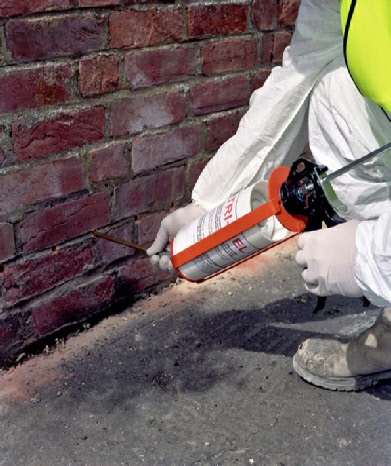
Proserve Property maintenance uses Dryzone, which is a special damp-proofing cream that is introduced along the mortar course at regular intervals by injecting it into pre-drilled holes. The Dryzone then diffuses before curing to form a continuous water-repellent barrier. This prevents the damp from rising up the wall.
Dry Rot & Wet Rot
Once timber has been allowed to become damp, and remain damp, it can be infected with many species of wood rotting fungi. In order to treat such a problem we would need to first carry out an exploratory survey to ascertain the extent of the damage caused. A survey report would then detail the recommended way to tackle the problem.
Penetrating Damp
Although resulting in a similar outcome, the origin of penetrating damp can vary
greatly compared with Rising damp.
Examples include leaking gutters and down pipes,
defective flashing's, masonry defects and poor ventilation. Basements and vaults
are particularly prone to penetrating damp due to increased water pressures at sub-ground
levels.
Treatment for penetrating damp at ground level
As penetrating damp often occurs at
levels higher than several feet from the ground a DPC would be ineffective as a remedial
treatment. Proserve’s remedy is to remove the existing damp plaster and re-plaster
using a waterproof chemical.
Two ways to treat penetrating damp at sub-ground level (tanking)
1) Cavity wall membrane
system; involves a tough plastic membrane being applied to the walls and floor of
the basement. Batons are then fixed to the areas and plasterboard placed over them.
This leaves a dry, perfectly smooth finish, ready for decorating.
2) Epoxy system;
this involves applying several coats of special waterproof epoxy product to the affected
areas. The product dries and forms an impenetrable shield preventing any further
damp penetration